Data

New IReNA Online Seminar Organizing Committee
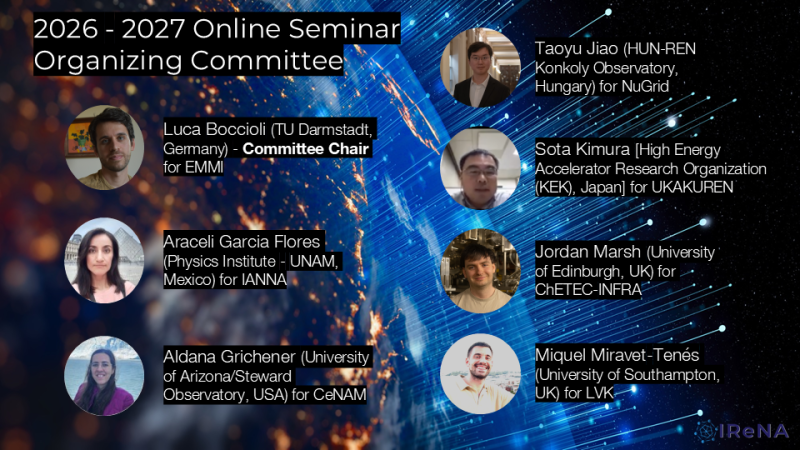
We are excited to introduce the members of the 2026-2027 IReNA Online Seminar Organizing Committee!
Bringing together postdoctoral researchers from across the IReNA member networks, the committee represents the breadth and multidisciplinary nature of research within the nuclear astrophysics field. The organizing committee will shape a seminar series that highlights emerging results, sparks new conversations, and creates opportunities to connect researchers across disciplines, institutions and countries.
Their perspectives as early career researchers is especially valuable as they bring fresh ideas, new scientific connections and a strong sense of what can make an online seminar engaging and useful to the community. We look forward to an exciting year of talks and lively discussions!
 Luca Boccioli (TU Darmstadt, Germany), Committee Chair
I am a Postdoc at TU Darmstadt (and previously at UC Berkeley) and earned my Ph.D. from the University of Notre Dame in 2023. My research uses core-collapse supernova simulations to study explodability and nucleosynthesis of massive stars, as well as the impact of the nuclear equation of state, neutrino opacities, and neutrino transport on the explosion.
 Araceli Garcia Flores (Physics Institute - UNAM, Mexico)
My academic background is in experimental nuclear physics, currently I am working in the analysis of nuclear reactions of interest in nucleosynthesis, particularly in the indirect measure of neutron capture cross sections.
 Aldana Grichener (University of Arizona/Steward Observatory, USA)
I am a theoretical and computational astrophysicist interested in the connection between nuclear astrophysics and stellar evolution. I am currently a Steward Observatory Theory Fellow/IAU-Gruber Fellow in the University of Arizona and Steward Observatory. I have been working on a broad range of topics, including but not restricted to r-process, high energy neutrinos, transients, binary interactions, supernova remnants, gravitational wave progenitors and machine learning for astrophysical purposes.
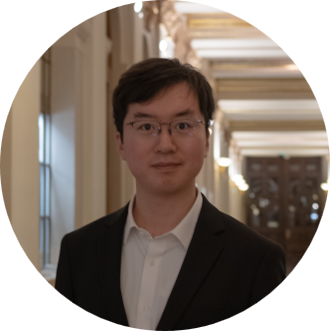 Taoyu Jiao (HUN-REN Konkoly Observatory, Hungary)
I am a postdoctoral researcher at the HUN-REN Konkoly Observatory in Budapest, Hungary. My research focuses on bridging nuclear experiments with stellar nucleosynthesis modelling, particularly to understand the production of heavy elements in s-process. During my PhD, I participated in underground nuclear astrophysics experiments at JUNA.
 Sota Kimura (High Energy Accelerator Research Organization [KEK], Japan)
I am a postdoctoral researcher at the High Energy Accelerator Research Organization (KEK). My research focuses on low-energy nuclear physics experiments, specifically on nuclear mass measurements using multireflection time-of-flight mass spectrographs and related studies.
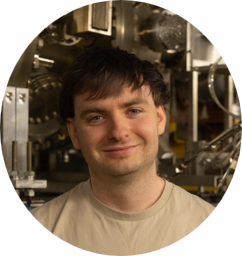 Jordan Marsh (University of Edinburgh, UK)
I am a Postdoctoral Research Associate in experimental nuclear astrophysics working at the University of Edinburgh. My research is focused on the measurement of nuclear reaction cross sections for Big Bang nucleosynthesis (BBN) and stellar nucleosynthesis. My PhD was on the development of low-energy nuclear reacton measurements in heavy-ion storage rings at the GSI laboratory in Darmstadt. In my Postdoc, I have continued to work on storage rings where we can now perform measurements relevant for a wide variety of nucleosynthesis environments ranging from BBN to stellar burning, and including explosive nucleosynthesis. I have also been involved in nuclear reaction measurements at deep underground laboratories as part of the LUNA collaboration. Here, the underground environment shields our experiment from cosmic background and allows for reactions with very low cross sections to be measured.
 Miquel Miravet-Tenés (University of Southampton, UK)
I am a research fellow at the University of Southampton. My research focuses on studying binary neutron star mergers through numerical-relativity simulations. I aim to understand the role of small-scale turbulence and finite resistivity in the dynamics of these systems and their multimessenger observables. I am also a member of the LIGO–Virgo–KAGRA Collaboration, and I am involved in studies concerning the gravitational-wave signal produced in the merger of neutron stars.