Data

AstroNuc 2026: Nuclear Astrophysics Workshop: Nucleosynthesis from Stars to Galaxies
AstroNuc 2026 Brings Together Nuclear
Astrophysics Communities
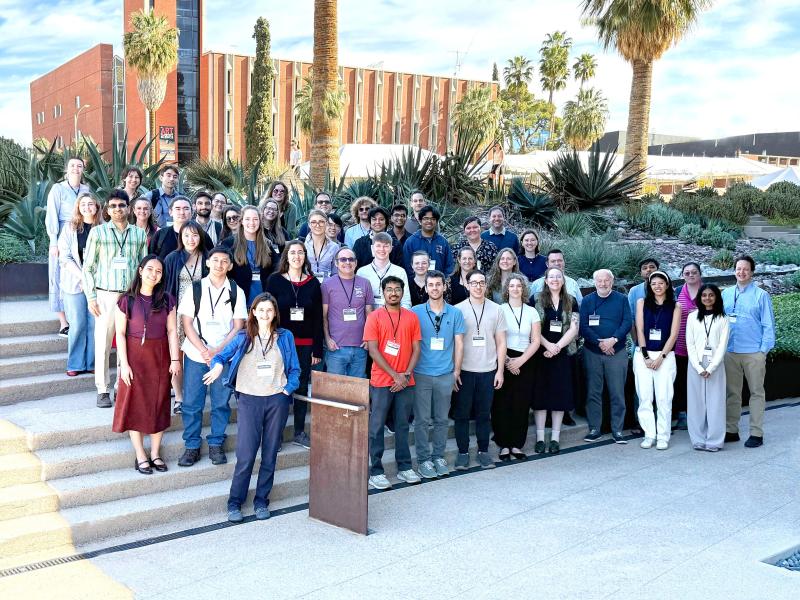
AstroNuc 2026 — Nuclear Astrophysics Workshop: Nucleosynthesis from Stars to Galaxies — took place at the University of Arizona in Tucson, on March 10–13, 2026. The meeting brought together stellar and galactic theorists, observers of transients and stellar archaeology, and experimental nuclear physicists to discuss recent advances and foster new collaborations across the field. The workshop showcased how rapidly the field of nuclear astrophysics is advancing, driven by a new generation of ground and space-based observations, rare and stable-beam experiments, theoretical developments, and analytical tools including artificial intelligence.
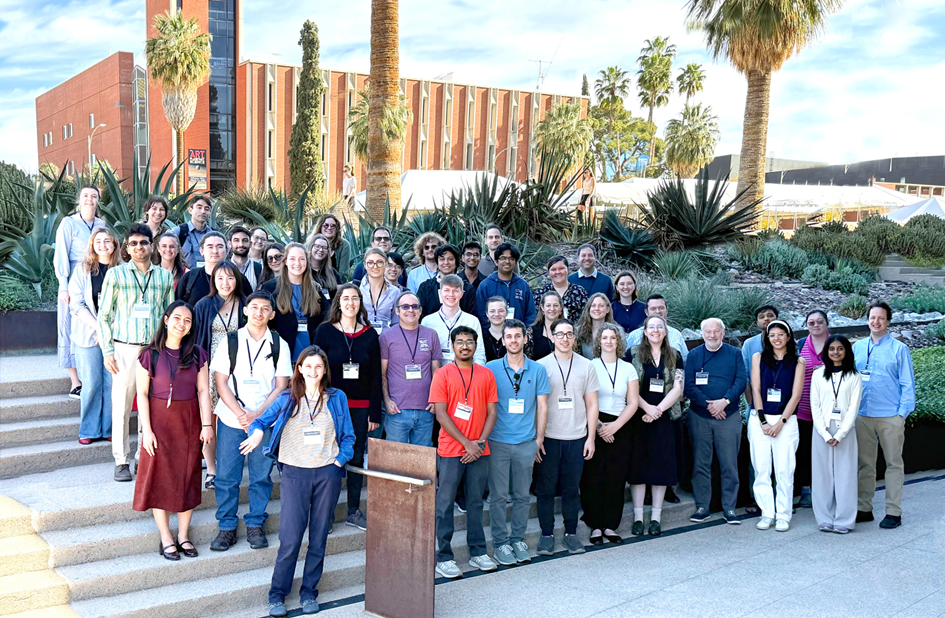
Supported by CeNAM and building on its interdisciplinary mission, the workshop provided a space to identify pressing open questions, discuss shared challenges, and develop the common language needed to address some of the biggest questions in nuclear astrophysics in the years ahead. AstroNuc welcomed 63 participants from 5 different continents, including faculty, postdoctoral researchers, graduate students, and some highly motivated undergrads. The program featured 11 overview talks and 36 shorter invited and contributed presentations, along with lively post-talk discussions and dedicated community-driven sessions led by volunteer participants. These community-driven sessions spanned topics ranging from space missions, such as the COSI gamma-ray telescope and new asteroseismology efforts to research methods including abundance measurements and machine learning approaches, as well as key aspects of stellar and explosive nucleosynthesis.
A central goal of AstroNuc 2026 was to create opportunities for early-career researchers, who had the chance to present their own work, lead discussion panels, and engage directly with more senior participants. In the same spirit, a distinctive aspect of the workshop was its practical training component. The program included three 90-minute hands-on sessions led by open-source code developers, providing participants with accessible introductions to widely used tools in nuclear astrophysics. These sessions focused on nuclear reaction networks in stars, spectral synthesis using observed supernova spectra, and stellar-population modeling in galaxies. Being self-contained, these hands-on sessions are now freely available on the workshop’s website for all interested researchers.
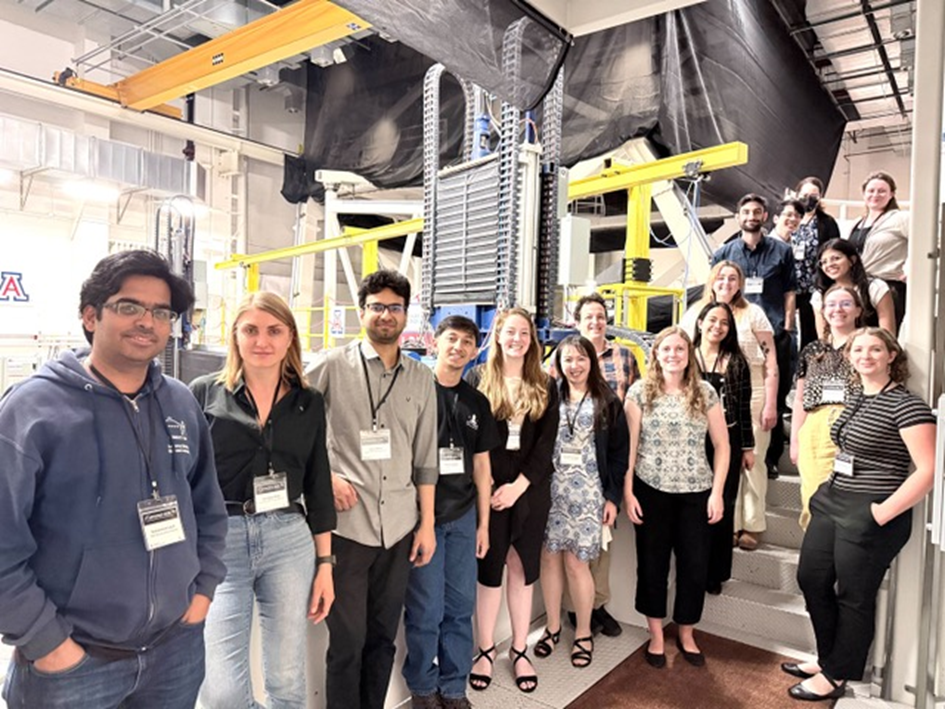
Workshop participants also had the opportunity to tour the Mirror lab at the University of Arizona, where they learned how pioneering engineering, optical science, and precision manufacturing come together to create the world’s largest and most advanced telescope mirrors. Located beneath the U of A’s football stadium, the Mirror Lab is the birthplace of mirrors for the Giant Magellan Telescope, an instrument with a 25-meter primary mirror composed of seven of 8.4-meter segments.
Learn more >> https://sites.google.com/view/astronuc2026/home